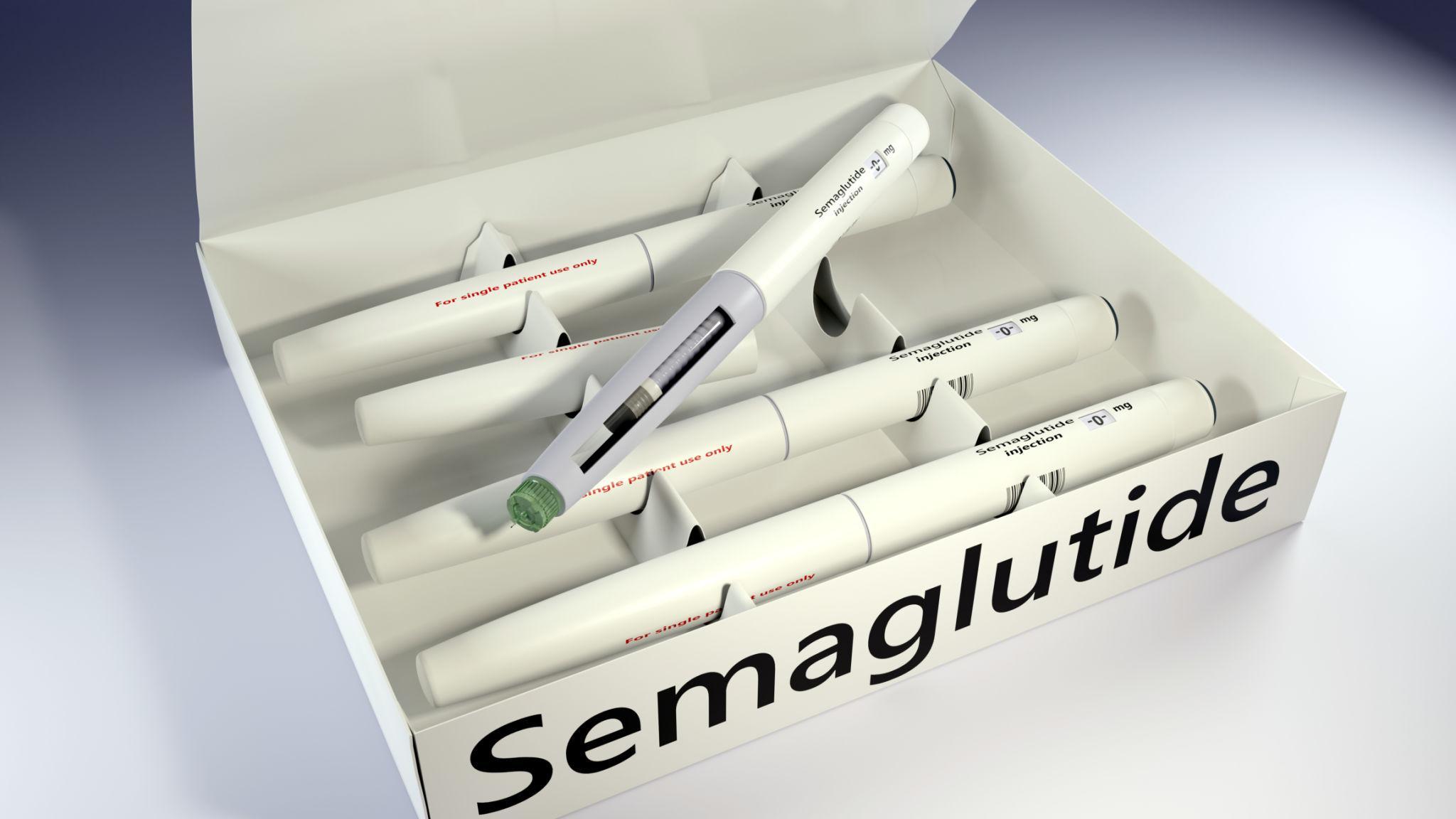
Semaglutide – just another weight-loss drug?
As an Amazon Associate I earn from qualifying purchases.
Semaglutide – just another weight-loss drug loved by all the celebs?
You probably think semaglutide is just another weight-loss drug. The kind celebrities and tech founders whisper about at dinner parties while their espressos get cold. The Ozempic everyone either loves or resents, depending on their Twitter timeline and body composition goals.
But something unexpected just happened in a lab that changes how we should think about this molecule entirely.
Researchers from Yale, Einstein College of Medicine, and hospitals across Taiwan ran the numbers on something nobody was really asking about: what happens when semaglutide meets brain cancer? Not as a treatment. Not as a miracle cure. As a survival multiplier.
The data is strange enough to deserve a second look.
The 37 Percent Nobody Predicted
Here’s where it gets interesting. Scientists pulled medical records from 151 hospitals across the globe and found 19,000 patients with a specific and devastating diagnosis: cancer that metastasized to the brain, combined with type 2 diabetes. They split them into two groups. One group got semaglutide. One didn’t.
The result: patients on semaglutide were roughly 37 percent less likely to die during the three-year follow-up period.
That’s not a marginal difference. That’s not a rounding error in a dataset. That’s the kind of number that makes oncologists stop mid-sentence.
The pattern held across lung cancer, breast cancer, and melanoma—the major killers where brain metastases are most common. Consistent. Durable. Real.
Now, the researchers were careful. They didn’t claim semaglutide attacks tumors. Brain metastases are advanced-stage cancer, the kind where treatment options get sparse and prognosis gets dark. Semaglutide doesn’t kill cancer cells. What it appears to do is something subtler and possibly more valuable: it creates an environment where the brain—and the body—survives longer.
Why Your Brain Chemistry Matters More Than You Think
The mechanism here is where things get genuinely fascinating. GLP-1 receptor agonists—the drug class semaglutide belongs to—don’t just regulate blood sugar. They modulate something much older and more foundational: inflammation in the nervous system.
When cancer spreads to the brain, it doesn’t just sit there. It triggers a cascade. Neuroinflammation. Oxidative stress. Mitochondrial dysfunction. The brain’s blood-brain barrier—the selective gate that usually keeps toxins out—starts to deteriorate. It’s like watching the immune system turn against itself in slow motion.
Semaglutide appears to stabilize that barrier. To reduce the inflammatory storm. To protect mitochondria from oxidation. These aren’t flashy mechanisms. They won’t make headlines like “drug cures cancer.” But for someone with months to live, for someone whose cancer has already crossed the blood-brain barrier, stabilizing the fortress matters.
The surprise? A drug developed to help overweight people manage blood glucose may work because it’s doing something the brain desperately needs—and we only discovered it by accident, by looking at data from people who happened to be taking it for an entirely different reason.
The Affordability Earthquake Nobody Saw Coming
Here’s the part that could actually change millions of lives: Novo Nordisk just lost patent protection in most countries. Semaglutide is going generic. Prices are dropping by 90 percent.
In India alone, the patent ended in March 2026. Within weeks, six major manufacturers—Alkem, NATCO, Eris, Dr. Reddy’s, Sun Pharma, Glenmark—launched their own versions. What cost $900 a month now costs $90. Maybe less.
This matters not just for weight loss or diabetes management. It means that if semaglutide genuinely extends survival in brain metastases patients, access just opened to 40 percent of the world’s population. That’s not corporate spin. That’s a math problem with real consequences.
The irony is sharp: the drug that became a status symbol—the one wealthy people fought to access because it promised thinness—might prove its deepest value in ICUs and cancer centers serving people who could never afford it before.
Who Shouldn’t Touch This (And Why It Matters)
Before the excitement takes hold, reality: semaglutide has real contraindications. If you have a history of medullary thyroid carcinoma, the drug is off-limits. Severe pancreatitis in your past? Don’t go near it. Gastroparesis, severe diabetic retinopathy, pregnancy, type 1 diabetes—these are stop signs, not yield signs.
And if you’re thinking about using semaglutide purely for cosmetic weight loss without metabolic disease? The evidence base doesn’t justify it, which means you’re using a powerful drug to chase an aesthetic rather than treat a condition.
That distinction—between medical indication and lifestyle preference—is where semaglutide’s future gets complicated. The drug works. The data shows it. But demand keeps expanding into territory where risk-benefit calculations flip.
What This Actually Means For You
This study doesn’t mean you should get semaglutide injected into your thigh while hoping it prevents every disease. It doesn’t mean cancer patients should expect miracles. What it means is this: we keep discovering that managing metabolic health—blood sugar, insulin sensitivity, chronic inflammation—appears to protect against outcomes that seem completely unrelated on the surface.
A drug for diabetes. A mechanism for brain protection. A survival advantage for metastatic cancer. Three things that seem disconnected until you understand that the human body is integrated in ways we’re still uncovering.
The real takeaway isn’t about semaglutide specifically. It’s that the diseases we think of as separate categories—diabetes over here, cancer over there—are actually expressions of shared underlying breakdowns. Fix the inflammation. Stabilize the mitochondria. Protect the barriers that keep your body functioning. Everything downstream gets better.
Semaglutide is just the tool. The lesson is the one you need to remember: prevention beats treatment. Metabolic health is brain health is cancer resistance is longevity. They’re the same conversation, wearing different labels.
Amazon and the Amazon logo are trademarks of Amazon.com, Inc, or its affiliates.