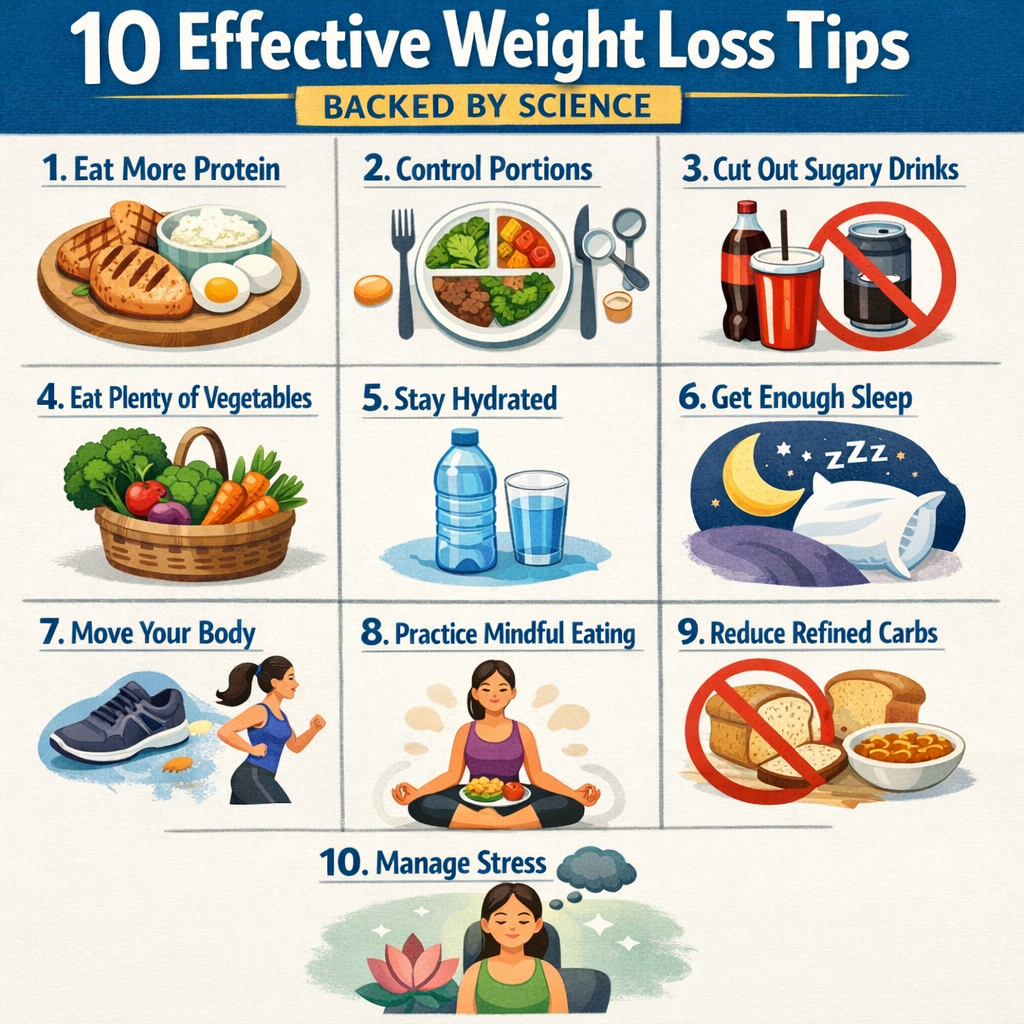
10 Effective Weight Loss Tips Backed by Science
As an Amazon Associate I earn from qualifying purchases.
 10 Effective Science-Backed Weight Loss Strategies That Actually Work
Hey there! If you’re tired of the endless cycle of fad diets and quick fixes, you’ve landed in the right place. I’ve been down that road myself, and it’s exhausting. The truth is, lasting weight loss isn’t about deprivation or magical pills. It’s about understanding the science of your body and making smart, sustainable changes. That’s where these science-backed weight loss strategies come in. This article isn’t a list of restrictive rules. Instead, it’s a collection of ten powerful, evidence-based tips that work with your biology, not against it. We’ll dive into everything from the best high-protein foods to reduce hunger to practical methods for managing weight loss plateaus effectively. My goal is to give you a clear, actionable roadmap. Forget the confusion and get ready for strategies that deliver real, sustainable results. Let’s build a healthier you, one smart step at a time.
Prioritize Protein: A Core Science-Backed Weight Loss Strategy
Let’s kick things off with one of the most powerful tools in your arsenal: protein. This isn’t just about bodybuilders and shakes. Eating adequate protein is a fundamental science-backed weight loss strategy for everyone. Here’s why it works so well. First, protein has a high thermic effect, meaning your body burns more calories just digesting it compared to fats or carbs. Second, and more importantly for your daily life, protein is incredibly satiating. It helps you feel full and satisfied, which naturally reduces your overall calorie intake without you feeling like you’re starving.
I used to struggle with constant snack cravings in the afternoon. Once I made a conscious effort to include a solid protein source at breakfast and lunch, those cravings virtually disappeared. It wasn’t about willpower; it was about biology. My body was finally getting the signal that it was nourished. So, what are the best high-protein foods to reduce hunger? Think beyond just chicken breast. Incorporate a variety like eggs, Greek yogurt, lentils, fish, tofu, and lean beef. A study published in the American Journal of Clinical Nutrition found that increasing protein intake to 25-30% of calories can boost metabolism by up to 100 calories per day and significantly reduce obsessive thoughts about food.
How to Seamlessly Add More Protein
You don’t need a complete diet overhaul. Start with small swaps. Add a scoop of collagen or protein powder to your morning coffee or oatmeal. Swap your midday bagel for a yogurt parfait with nuts and berries. Make sure every meal has a palm-sized portion of protein. This simple shift is a cornerstone of effective, science-backed weight loss strategies because it tackles hunger at its root, making everything else easier.
Don’t Drink Your Calories: A Simple Science-Backed Swap
This tip is deceptively simple but has a massive impact. Liquid calories from sodas, fancy coffee drinks, fruit juices, and even some smoothies don’t register in your brain’s hunger and fullness centers the same way solid food does. You can drink a 300-calorie latte and a 200-calorie soda and still feel just as hungry for your next meal. Those nearly 500 calories did nothing for your satiety but added a significant amount to your daily total.
I challenge you to track your liquid calories for just two days. You might be shocked. Switching to zero or low-calorie beverages is one of the easiest science-backed weight loss strategies you can implement immediately. Instead of orange juice, eat an orange. You’ll get the fiber and feel full. Swap the soda for sparkling water with a squeeze of lime. Choose black coffee or use a splash of milk instead of sugary creamers. The Harvard School of Public Health notes that sugary drinks are strongly linked to weight gain and obesity. By cutting them out, you create a significant calorie deficit almost effortlessly.
Embrace Mindful Eating for Better Portion Control
How often do you eat while scrolling through your phone, watching TV, or working at your desk? This distracted eating is a major culprit for overconsumption. Mindful eating is the practice of bringing your full attention to the experience of eating. It sounds a bit “woo-woo,” but the science is solid. It helps you recognize true hunger and fullness cues, leading to better portion control naturally.
Start with just one meal a day. Sit down at a table, free from screens. Take a moment to appreciate the food’s colors and smells. Chew slowly and actually taste each bite. Put your fork down between bites. Notice how you feel. Are you starting to feel satisfied? A review by the American Psychological Association highlights that mindful eating techniques can reduce binge eating and emotional eating. It’s not a diet; it’s a skill. By slowing down, you give your brain time (about 20 minutes) to receive the “I’m full” signal from your stomach, preventing that uncomfortable, overstuffed feeling.
Focus on Fiber-Rich Foods to Feel Fuller, Longer
If protein is one satiety superstar, fiber is its perfect partner. Dietary fiber, especially the viscous, soluble kind found in oats, beans, apples, and Brussels sprouts, forms a gel in your gut. This slows down digestion and the absorption of nutrients, which leads to a prolonged feeling of fullness and steadier blood sugar levels. This is crucial for avoiding those energy crashes that send you searching for a candy bar.
Aim to fill half your plate with non-starchy vegetables at most meals. Not only are they packed with fiber and nutrients, but they’re also low in calories, allowing you to eat a larger volume of food. Other fantastic fiber sources include berries, avocados, chia seeds, and whole grains like quinoa and barley. Research consistently shows that people who eat more fiber tend to have healthier body weights. It’s a natural, gentle way to manage your appetite and support your gut health, which is increasingly linked to overall metabolism. Think of fiber as your internal volume control for hunger.
Strength Training: Your Secret Weapon for Fat Loss
When people think “weight loss,” they often think “cardio.” While cardio is great for heart health, strength training is the unsung hero for transforming your body composition. Here’s the science: muscle tissue is metabolically active. The more muscle mass you have, the more calories your body burns at rest—yes, even while you’re sleeping! This is called your resting metabolic rate (RMR).
Cardio burns calories during the activity, but strength training builds the engine that burns calories 24/7. Furthermore, as you lose weight, some muscle loss is inevitable if you’re not actively preserving it. Strength training protects that precious muscle, ensuring the weight you lose comes primarily from fat stores. You don’t need to become a powerlifter. Two to three sessions per week focusing on compound movements like squats, push-ups, rows, and lunges can work wonders. I promise, you’ll feel stronger, more capable, and you’ll be building a body that burns fuel more efficiently every single day.
Prioritize Quality Sleep: The Overlooked Weight Loss Pillar
You might not connect your pillow with your plate, but sleep is a non-negotiable pillar of weight management. When you’re sleep-deprived (less than 7 hours for most adults), your hormones go haywire. Ghrelin, the “hunger hormone,” increases, while leptin, the “fullness hormone,” decreases. This is a biological one-two punch that makes you hungrier and less satisfied after you eat.
Beyond hormones, lack of sleep impairs your prefrontal cortex—the part of your brain responsible for decision-making and impulse control. So, when you’re tired, you’re not only hungrier, but you’re also more likely to reach for high-calorie, sugary, and fatty foods for a quick energy hit. I noticed this myself; after a bad night’s sleep, the office donuts were irresistible. Prioritizing sleep is a passive yet powerful science-backed weight loss strategy. Create a cool, dark sleep environment, establish a relaxing bedtime routine, and limit screen time before bed. Think of it as recovery for your metabolism.
Manage Stress to Curb Emotional Eating
Stress and weight are deeply intertwined. When you’re chronically stressed, your body produces high levels of cortisol. This “stress hormone” can increase appetite, drive cravings for comfort foods (usually high in sugar and fat), and encourage fat storage, particularly around the abdomen. For many of us, myself included, food becomes a coping mechanism—a way to soothe anxiety or boredom.
Breaking the cycle of emotional eating starts with awareness. When you feel a craving, pause and ask yourself: “Am I physically hungry, or am I feeling stressed, sad, or tired?” If it’s not physical hunger, find a non-food coping strategy. This could be a five-minute walk, deep breathing exercises, calling a friend, or even just drinking a glass of water. Techniques like meditation, yoga, or even regular leisure-time physical activity can lower baseline cortisol levels. The National Center for Complementary and Integrative Health provides great resources on stress management techniques. Managing stress isn’t just good for your mind; it’s essential for managing your weight.
Master Meal Prep to Avoid Unhealthy Choices
Willpower is a finite resource, and it’s weakest when you’re hungry, tired, or busy. Meal prepping is the strategy that removes the need for willpower at your hungriest moments. By deciding what you’ll eat in advance, you take the decision-making out of the “I’m starving, what’s fast?” equation. You’re far less likely to order pizza or hit the drive-thru when you have a healthy, ready-to-go meal in your fridge.
You don’t have to prep every single meal for the week. Start small. Maybe just prep your lunches or chop vegetables for the week’s dinners. Cook a big batch of quinoa or grilled chicken that you can use in different ways. Having healthy snacks pre-portioned, like nuts or veggie sticks with hummus, is a game-changer. This habit is a practical application of science-backed weight loss strategies because it leverages behavioral psychology—you’re making the healthy choice the easy and default choice. It saves you time, money, and countless calories.
Track Progress, But Not Just the Scale
Weighing yourself can be useful data, but it’s a terrible master. Your weight can fluctuate daily due to water retention, hormones, and digestion. If you fixate on the number, you’ll drive yourself crazy and miss the real signs of progress. True transformation is multi-dimensional. Start taking progress photos monthly. Notice how your clothes fit—are your jeans looser? Celebrate non-scale victories like having more energy, sleeping better, or lifting heavier weights at the gym.
You can also take body measurements (waist, hips, etc.) every few weeks. Sometimes the scale won’t budge, but you’ll lose inches, which means you’re losing fat and gaining muscle—a fantastic outcome! Tracking these varied metrics gives you a complete picture of your health journey and keeps you motivated when the scale seems stuck. This holistic view is key for managing weight loss plateaus effectively, as we’ll discuss next.
Strategies for Managing Weight Loss Plateaus Effectively
Hitting a plateau—a period where the scale stops moving despite your efforts—is not a sign of failure. It’s a normal, expected part of the weight loss journey. Your body adapts to your new routine, and your metabolism adjusts. The key is not to panic or give up, but to strategically reassess. First, double-check the basics. Have your portion sizes crept up? Are you logging your food accurately, including cooking oils and snacks? Sometimes, a little recalibration is all you need.
If you’re confident your tracking is tight, it’s time to introduce a change to shock your system out of its comfort zone. This is where managing weight loss plateaus effectively becomes an active process. You could change your workout routine by increasing intensity, trying a new activity like swimming or cycling, or adding more sets to your strength training. You could also adjust your macronutrients—perhaps cycling your carb intake or slightly increasing your protein. Sometimes, taking a short “diet break” and eating at maintenance calories for a week or two can help reset your hormones and mindset before you resume your deficit. A plateau is a signal to evolve your strategy, not abandon it.
Build Sustainable Habits, Not Short-Term Diets
This final point is the umbrella over all the others. The biggest reason people regain lost weight is that they treat weight loss as a temporary phase with an end date. They “go on a diet” and then “go off” it. The goal should be to build a new, healthier lifestyle—one you can maintain happily for years. Ask yourself about any change you make: “Can I see myself doing this in a year?” If the answer is no, it’s probably not sustainable.
Focus on adding positive habits rather than just restricting “bad” foods. Add a vegetable to every dinner. Add a 10-minute walk after lunch. Add an extra glass of water when you
Amazon and the Amazon logo are trademarks of Amazon.com, Inc, or its affiliates.